
Working at NASA, my office frequently had people stop by to interest us in “new technologies” they wished us to “invest in” via our grant programs. One of my many jobs was to review these applications in our specific areas of Advanced Life Support.
These applications were fairly easy to weed out before too much time was wasted on their reviews. The very first test was a review of the Executive Summary to check for grammar and non-scientific language. I had a personal feel for “acceptable and non-acceptable” technical language, and if that started out inadequate, the rest of the proposal typically followed.
Second, I went to the very back to review the proposed line-item budget – which was audited, so they were forced to lay the actual cookies out on the table. Here, I could easily spot a scheme to milk the government for a $75,000 grant that was encapsulated in a 15-page written report. Travel costs, salaries, and equipment expenses were always truth-tellers that could not be hidden from the auditors.
Third, I went to the Team Resumes that featured their project salaries spelled out. In some cases, these resume slots were “sold” by solo researchers to friends and acquaintances. These “extra professionals” were sometimes promised some modest payment for permission to add their resumes. In the end, only the prime applicant ended up doing all or most of the work, and the other folks were window dressing. The team’s resumes were often very indicative of this approach.
If the application passed all three tests, then I would read it in detail.
In the end, I had to select the best of the best… and then… personally defend their application before a Kennedy Space Center Technical Board. At this point, it was my expertise and professional judgement being examined in detail because I was asking the Agency to spend the money on this technical product. So, my report summaries had to be airtight.
The really interesting cases were the very few applications that came in that represented truly novel ideas that hovered somewhere between known scientific territory and science fiction. It was on these applications that I spent much of my review time. For it was the very purpose of this government program, the Small Business Innovative Research grants (SBIRs), to discover and then distinguish those true gems somewhere in the sludge. Yet, defending ideas that were hanging out in the gray area between science and Star Trek was challenging, to say the least.
I came to realize that this was, in fact, the history of science itself, writ microscopically. Every major, groundbreaking scientist in history was labeled a crackpot, crazy, or insane. Every single one. And regardless of how exquisite their theoretical evidence, the old guard steadfastly resisted it. In our office, we called this the “not-invented-here-syndrome.”
The father of Quantum Physics, Max Planck, said of this inevitable procedure that ultimately defined the rate of scientific progress, “Science only advances one funeral at a time.” When the old greybeards die off, science is finally released to advance.
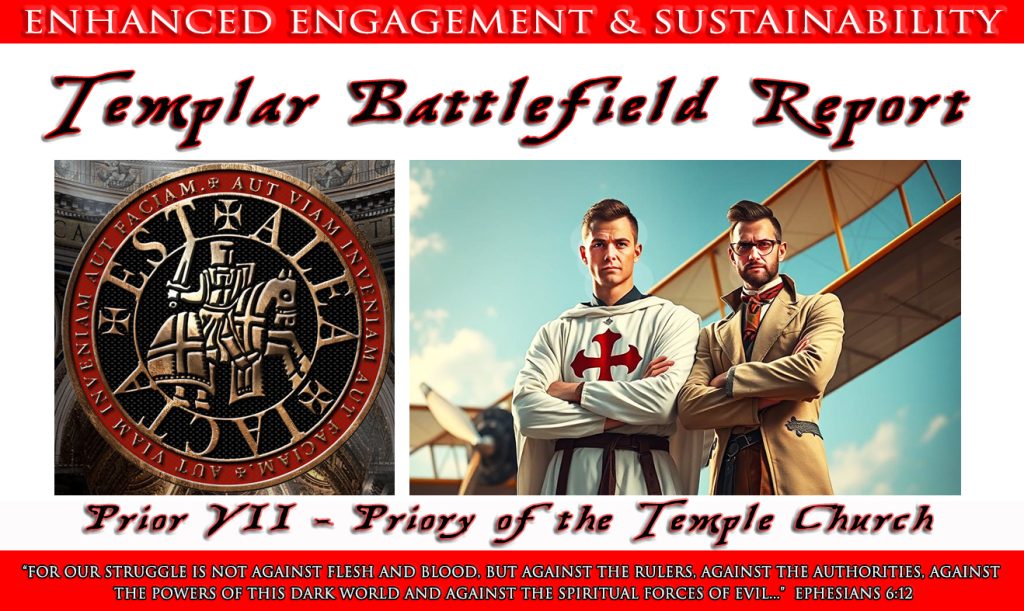
And yet, everyone remembers the really “good ideas” launched hopefully with much fanfare by young, fresh brains that turned out to be fairy tale dreams, such as with the invention of the heavier-than-air machines (airplanes). The U.S. Government supported one of the earlier contraptions designed and built by celebrated physicist and 3rd Secretary of the Smithsonian Institution, Samuel P. Langley. His comparatively well-funded machine directly competed with the Wright brothers’ comparatively cheap bicycle shop model.
Langley’s winged aerodrome ended up dropping straight down off its ship into the Potomac, while the brothers’ nearly unknown flyer opened the door to human air travel on Kill Devil Hills, North Carolina.
Said Aldous Huxley, “Another beautiful theory, slain by an ugly fact.”
So, there you have the balance in science. The only problem I had was scoring these ideas in advance of the actual work, because,
“The distance between genius and insanity is only measured by success.”
It was, after all, NASA that was paying for the success, not wasting taxpayer resources on another Sci-fi daydream fitted nicely to a government application form so that the applicant could finally buy that awesome boat they had been wanting.
As a Templar Prior, I still see this occasionally. Really, really good ideas are offered to better enhance our international mission. Some of them are sound and need immediate cultivation and the right introduction. Some of them require a full measure of professional leadership tact, and to be allowed a “time of maturation” – hopefully to be launched once more on the next Prior’s watch…
But, just like the U.S. Government looking for airplane talent, and like the ancient Prophet Diogenes casting about the wilderness searching for just one honest person, we all should be on a constant lookout for the honest-to-goodness extraordinary idea. We must be actively investigating for that extraordinary fresh insight, the energy of genius to arise out of the ether and make a difference to our Order and particularly the Christians at risk in the land where Jesus lived, walked, died, and rose.
As a Prior, that has been one of my jobs: to look around, to listen, and then to act after a thorough review.
I am excited to say that one of our younger Knights (JS) has presented just such an idea that I will be sharing up the line and hopefully with you in the next few weeks.
I say all this to invite any and all of you – individually or as a brainstorming team – to share freely with me any ideas that we can examine and send up the line to vet so that by deign and by process our Order may eventually enact.
Together, we can stand by and watch your ideas make the lives of our Christ-following families better and more tenable in a place where life is not always comfortable or even safe.
Let us therefore measure our success as one that is fueled by our genius and fearless application to problems that have escaped few practical solutions for thousands of years. And at the same time, we must be smart enough and prepared and ready to move ahead while not so systemically moribund that we have to wait for the old guard to die off.
How do I know that any of us is actually up to this task?
Because we each are indwelled by the Creator and have been given His Mind. In that sense, we have no competition on this side of the New Jerusalem. (John 14:26, 1 Corinthians 2:16)
What are we waiting for?!